



Tournament operations
Amateur Tournament Planning Checklist
A chronological checklist from six weeks before the event through the post-final wrap-up.
Blog
Practical guides for running tournaments and leagues: formats, scheduling, registration, tiebreakers and tool comparisons, without the jargon.
You run a club tournament, a charity day or a weeknight league. These guides are written for the volunteers who plan everything from their phone.
Each guide answers one practical question: which format, how many games, how long to plan for. You leave with numbers, worked examples and clear steps to follow.
Start with the featured guide at the top of the list. For a competition over several weeks, read the league guides first.
Once your plan is ready, build your bracket for free in Rally, right from your phone. The comparisons also help you pick the right tool with confidence.
Several guides start from a specific sport, like pickleball or cornhole. Their numbers still hold for most recreational club sports.
Every guide is free to read, with no account to create. Share them with the rest of your organizing team or your club’s board.
Choose your tournament format →Prepare your league season →Build your free bracket →League help center →
Tournament operations
A chronological checklist from six weeks before the event through the post-final wrap-up.
Planning, timing, registration and day-of tournament operations.
Tournament operations
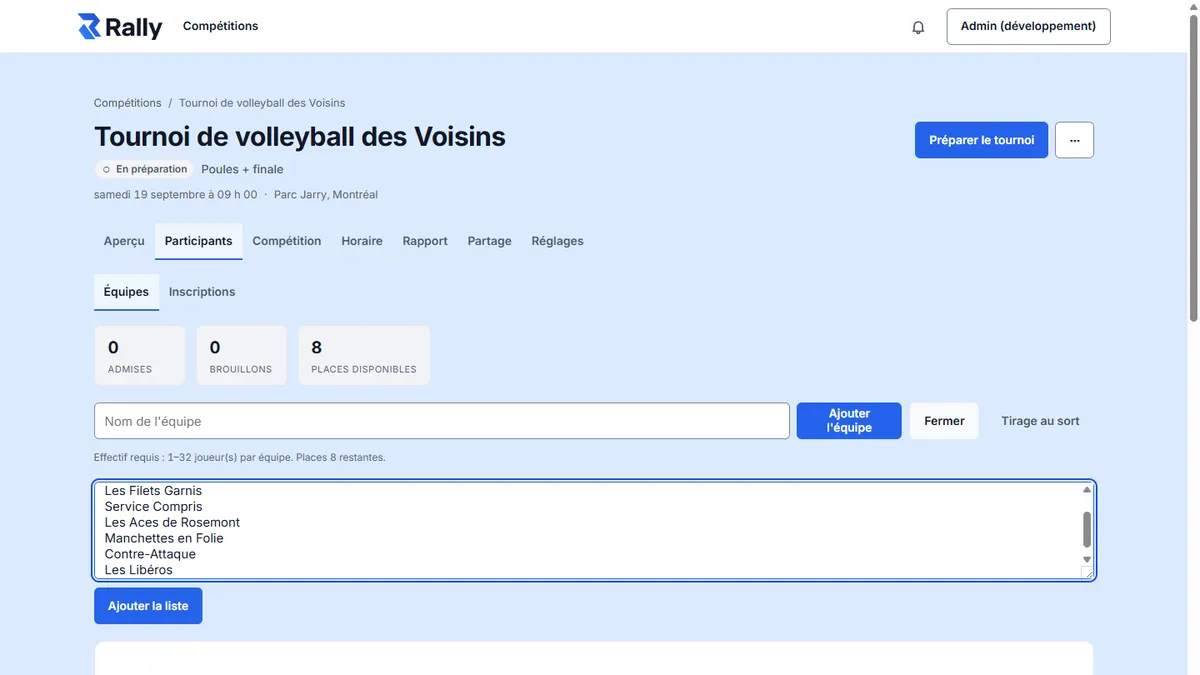
An invite link that actually registers the team into the tournament, no copy-pasting from a separate form.
Tournament operations
A checked method for separating games, rounds and time slots, then assigning eight teams across three courts.
Tournament operations
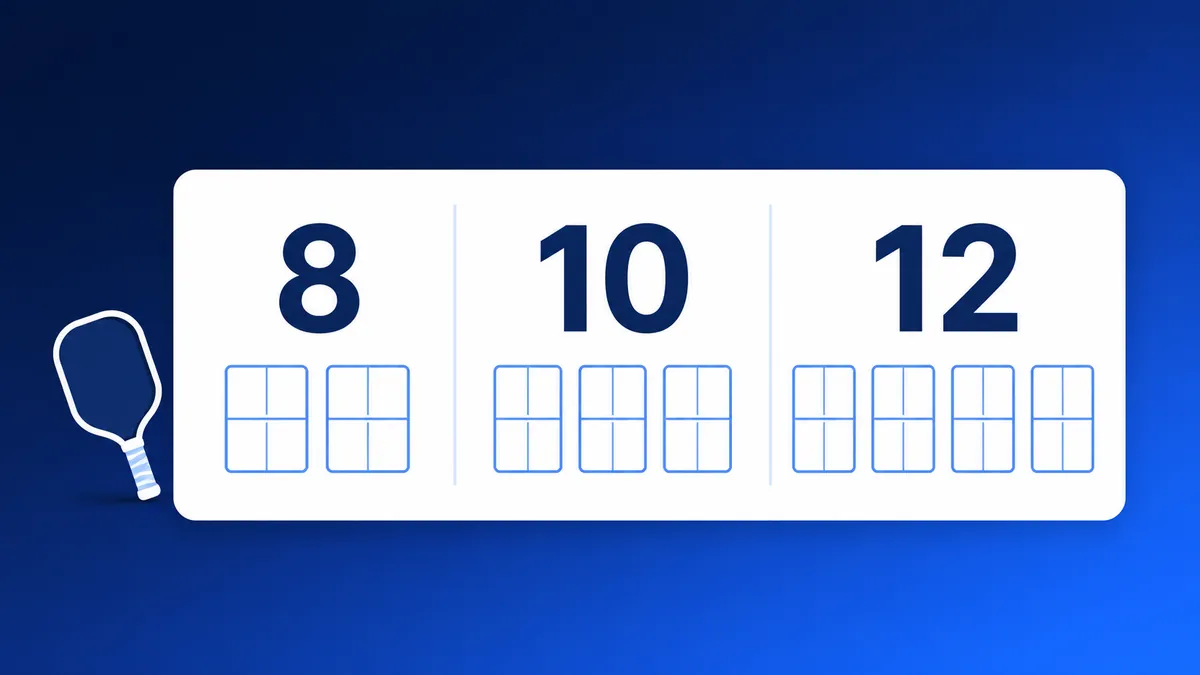
Three copy-ready schedules with courts, rest, pools and playoffs for a realistic tournament day.
Tournament operations
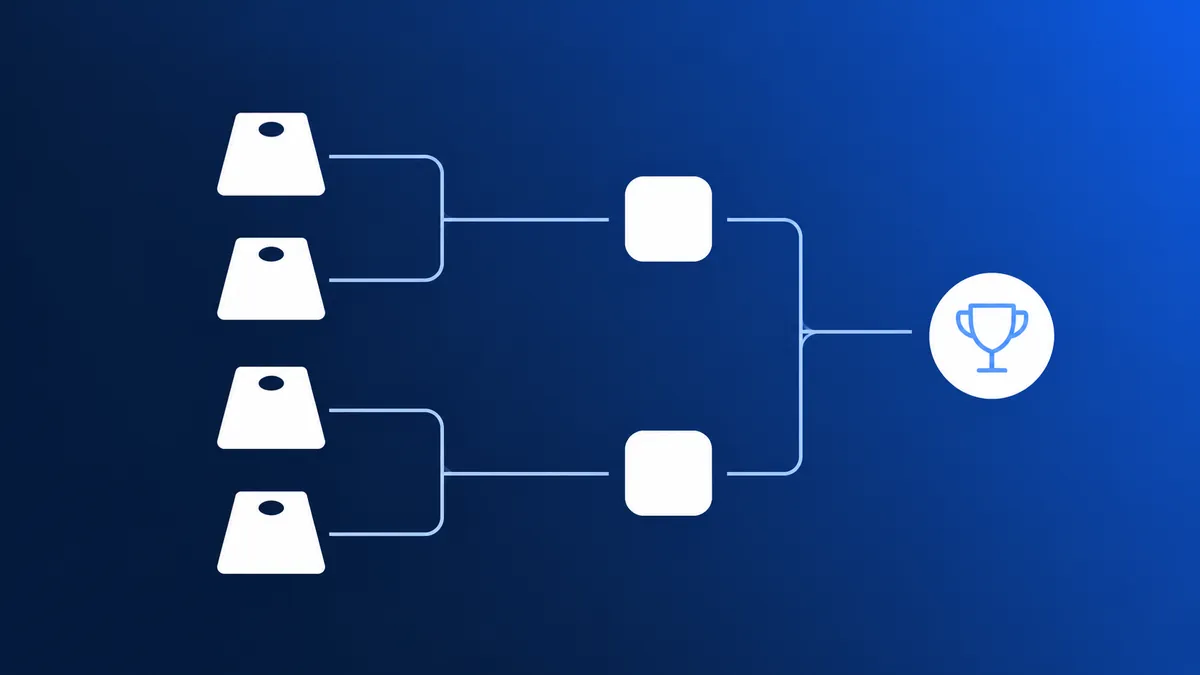
A checked three-hour plan for rotating sixteen teams across four sets of cornhole boards.

Tournament operations
A black-and-white A4 or Letter template for confirming every result and keeping an offline backup.
Tournament operations
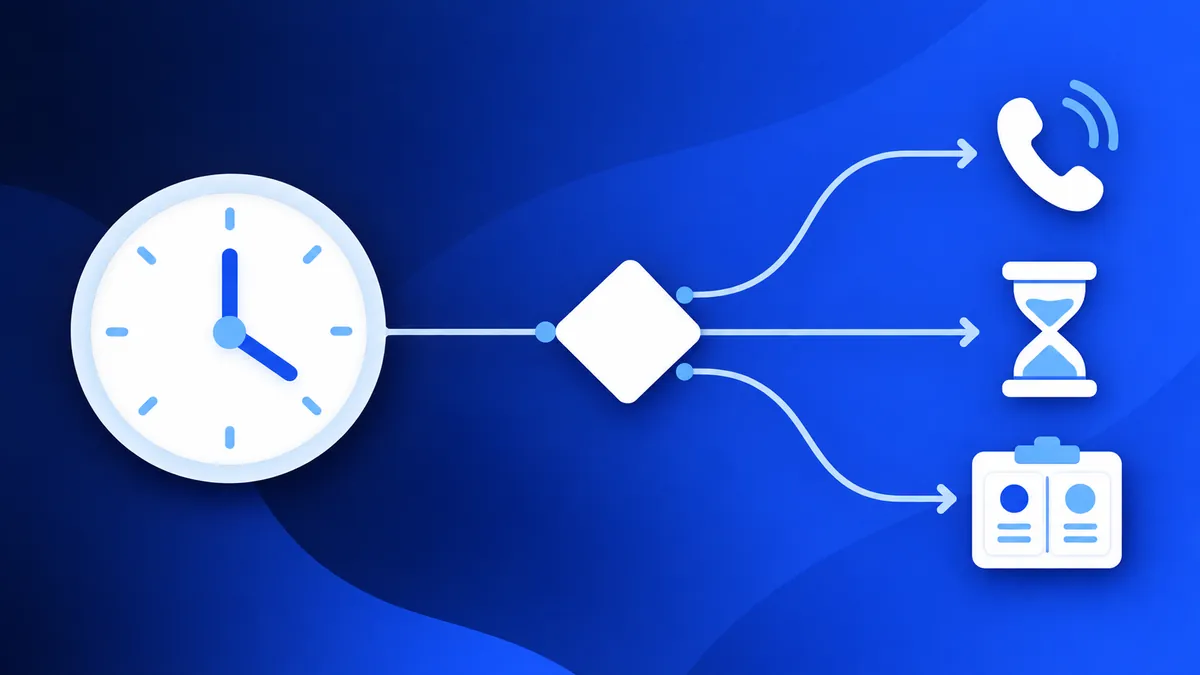
An adaptable policy, decision tree and four messages for handling disruption without improvising.
Tournament operations
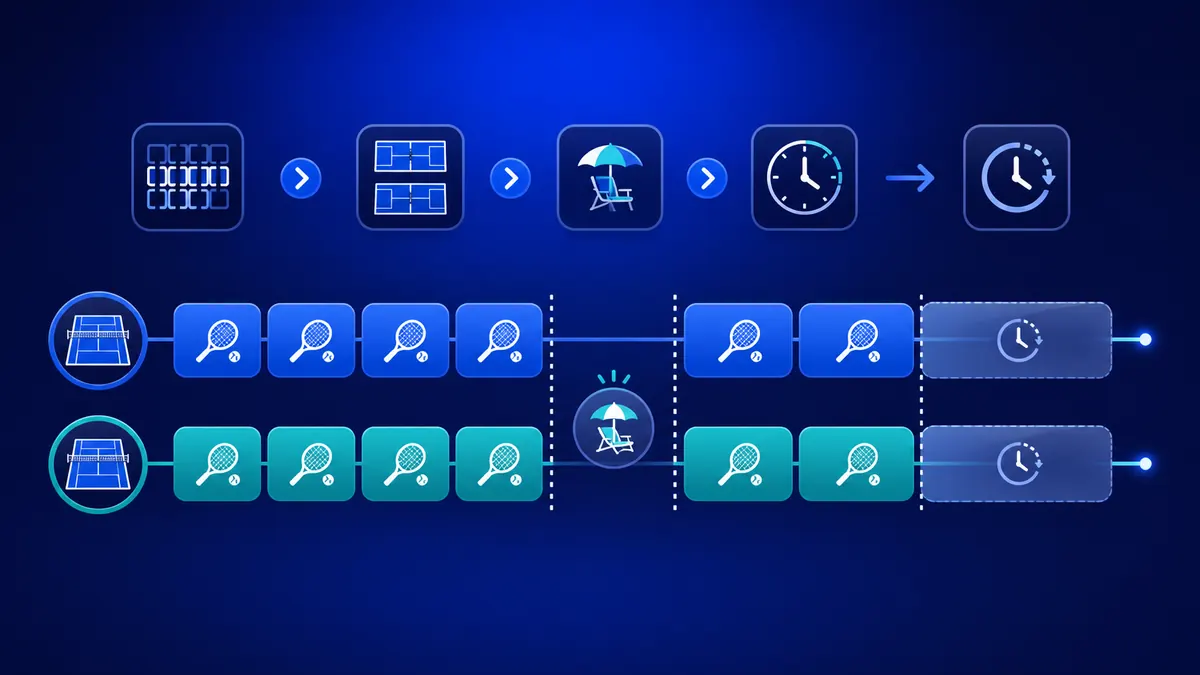
Turn games, courts, transitions and delay buffers into a tournament schedule that can actually fit the day.
Tournament operations
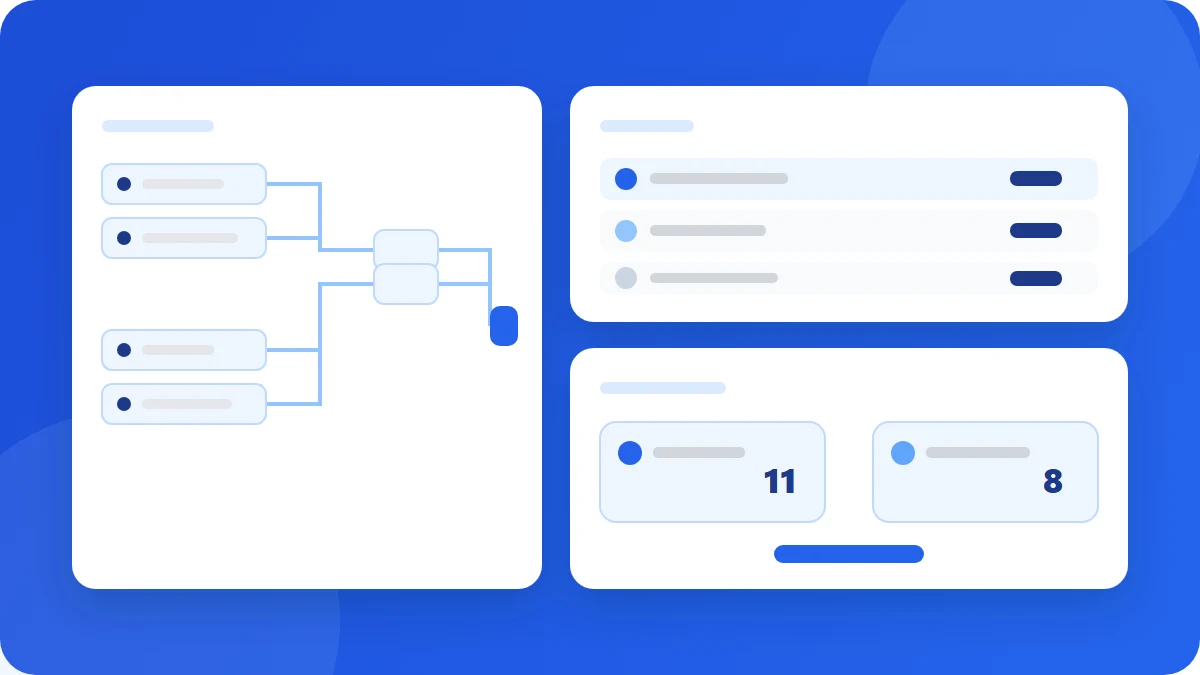
One simple tool to set the bracket, follow every result and give everyone the same view of the tournament.
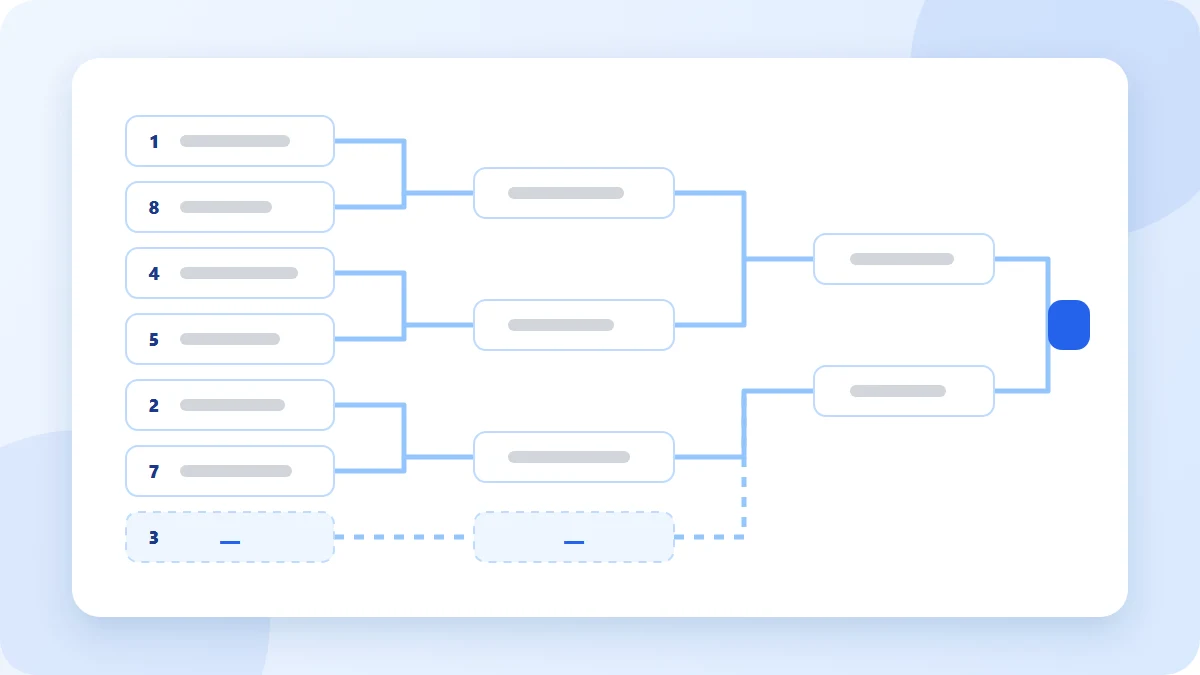
Tournament operations
From format selection to byes, make the important decisions before the first game begins.
Choose the structure, calculate games and advance teams fairly.
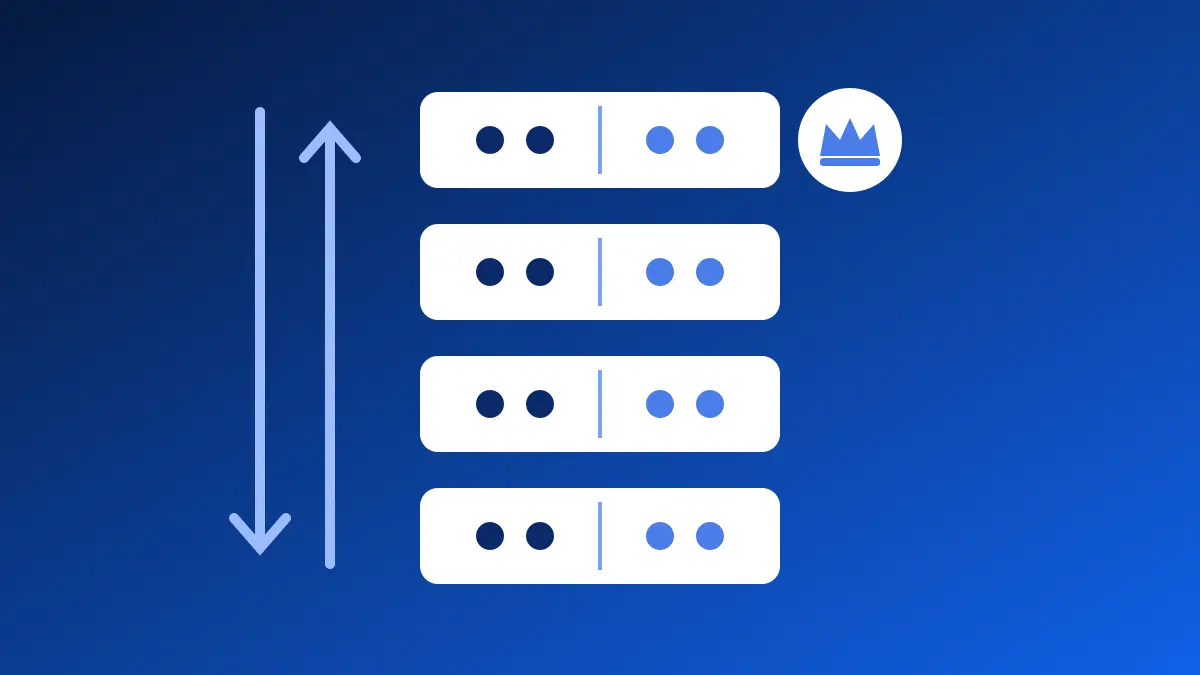
Tournament formats
Winners up, losers down: the rules, partner options, rest rotation and scoring for a King of the Court night.
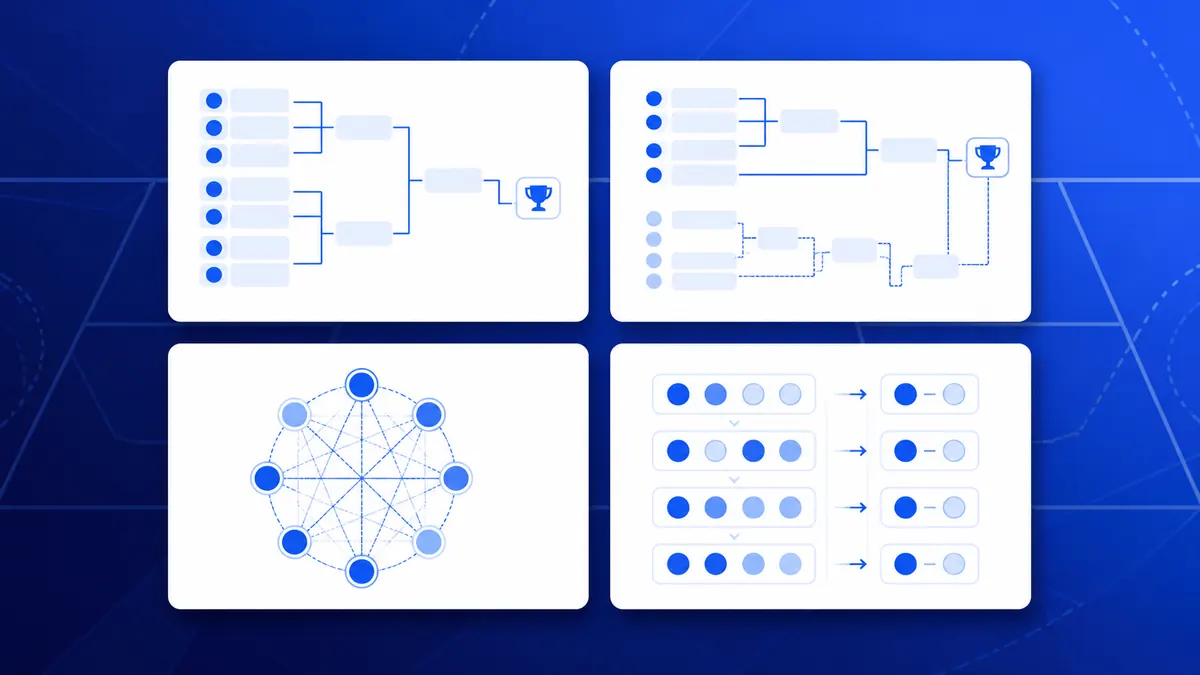
Tournament formats
Compare formats by team count, available time and playing areas, and the games guaranteed to each team.
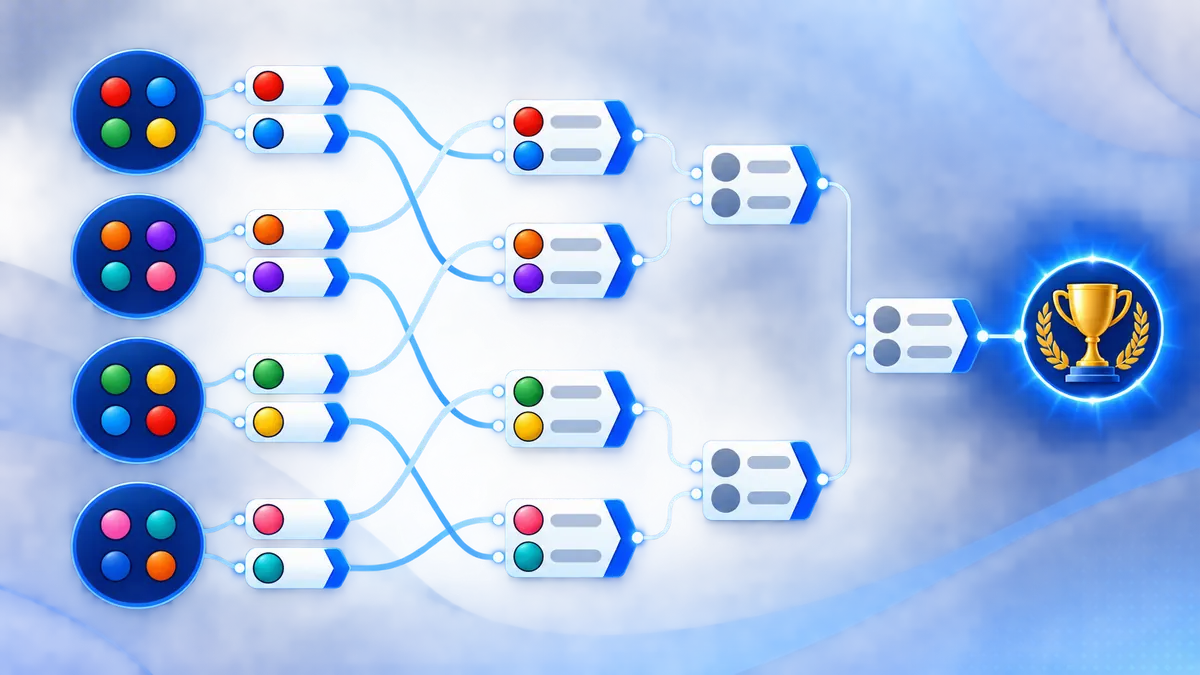
Tournament formats
Set qualifiers, crossover rules and seeding before turning pool standings into a fair knockout bracket.
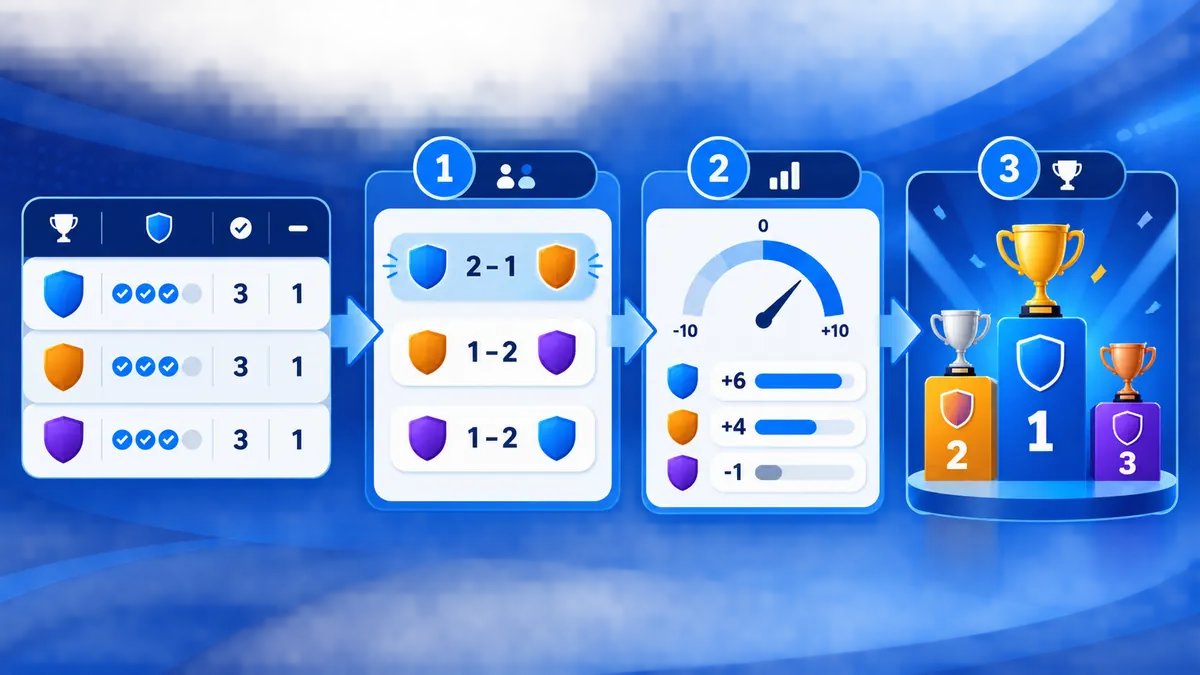
Tournament formats
Set a transparent order for two-team ties, mini-tables, point differential and forfeits before play begins.
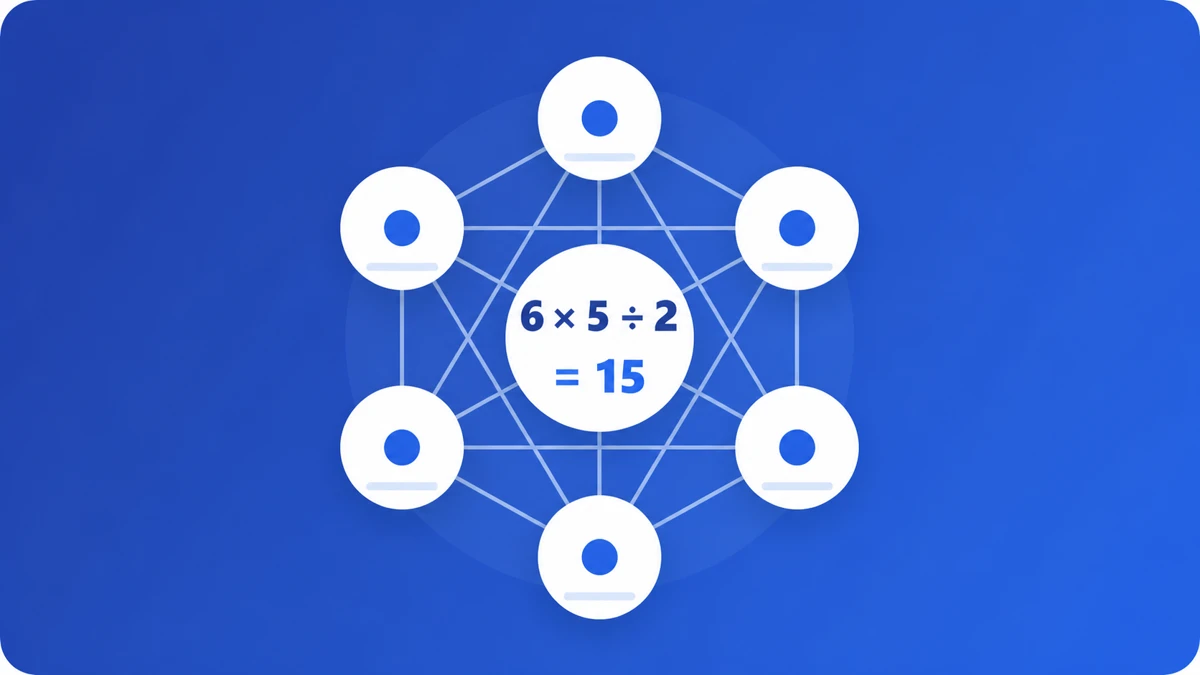
Tournament formats
Use the formula, round count and full table to decide whether an all-play-all tournament fits your day.
Prepare and run a recurring competition.
League operations
Make the key decisions before opening night, then keep a simple routine throughout the season.
League operations
Calculate games, assign league nights and check conflicts before sharing your schedule.
League operations
Keep a reliable schedule and clear instructions, from the first request to the confirmed replacement game.
Compare Rally with other tournament and league software.
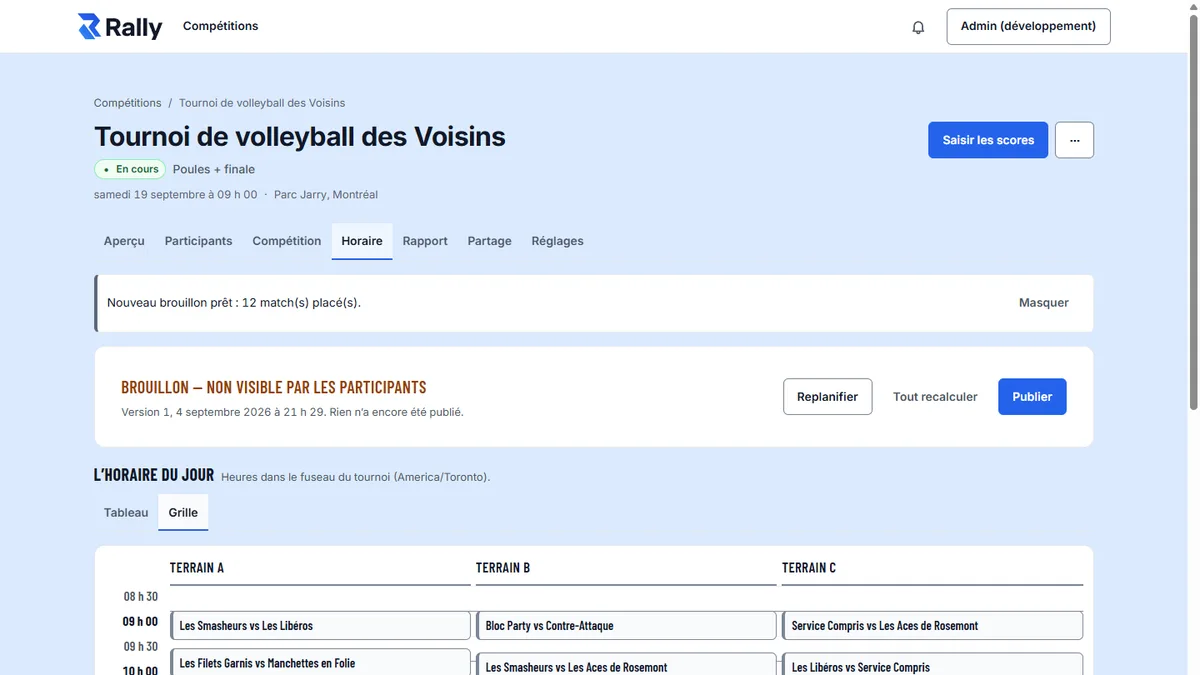
Tool comparisons
A ranking by real need — scheduling, registration, leagues, French, price — not just a list of names.
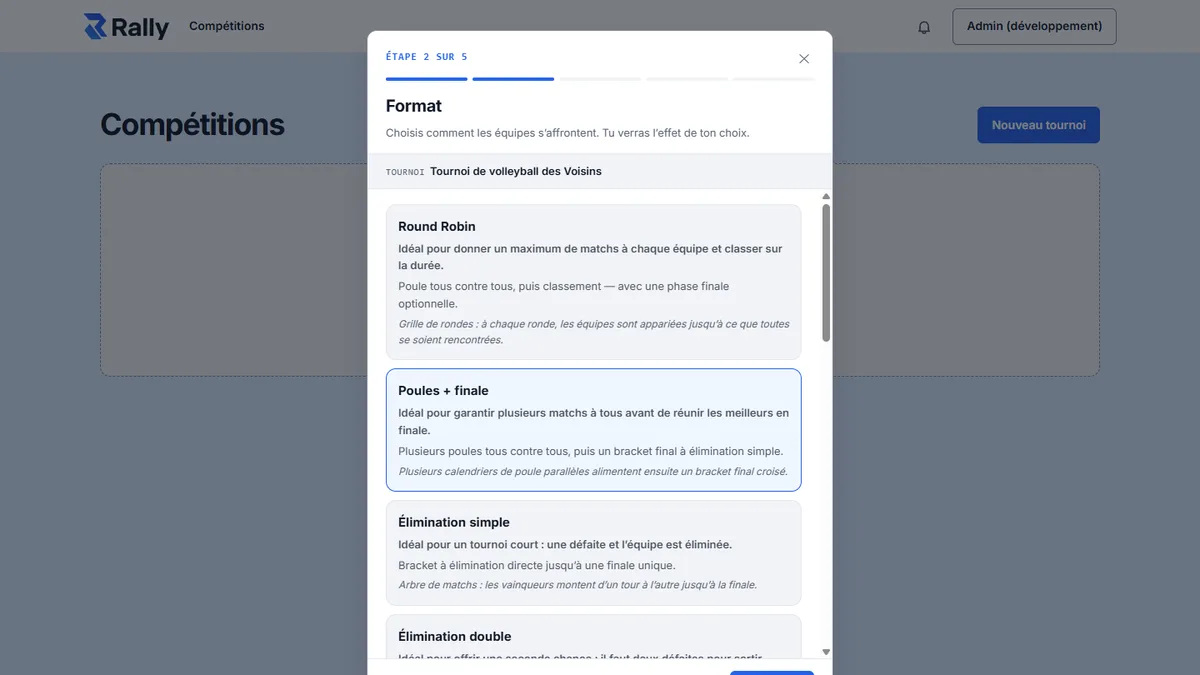
Tool comparisons
The verdict in one sentence, a full comparison table and a concrete 24-pair, 6-court pickleball scenario.
Tool comparisons
An explicit methodology, a 7-tool comparison table and the best pick for your specific use case.
Tool comparisons
What the three tools share, where they really differ, and the limits of each, Rally included.
Tool comparisons
Five common myths, each tested against verifiable facts, plus what remains a genuine limitation.